

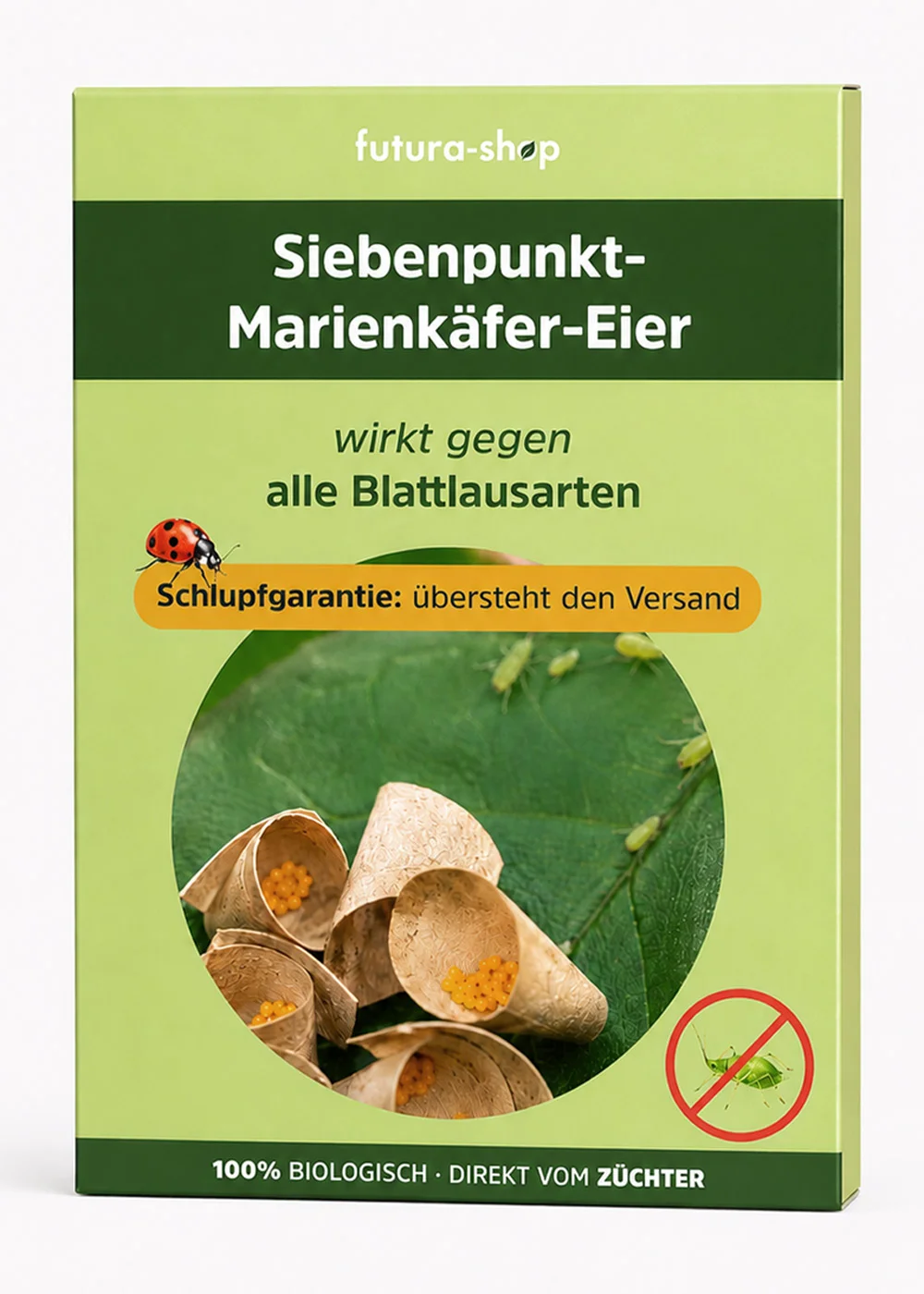
Seven-Spot Ladybird Eggs against Aphids
Available, delivery time: Versand jeden Dienstag

Product information "Seven-Spot Ladybird Eggs against Aphids"
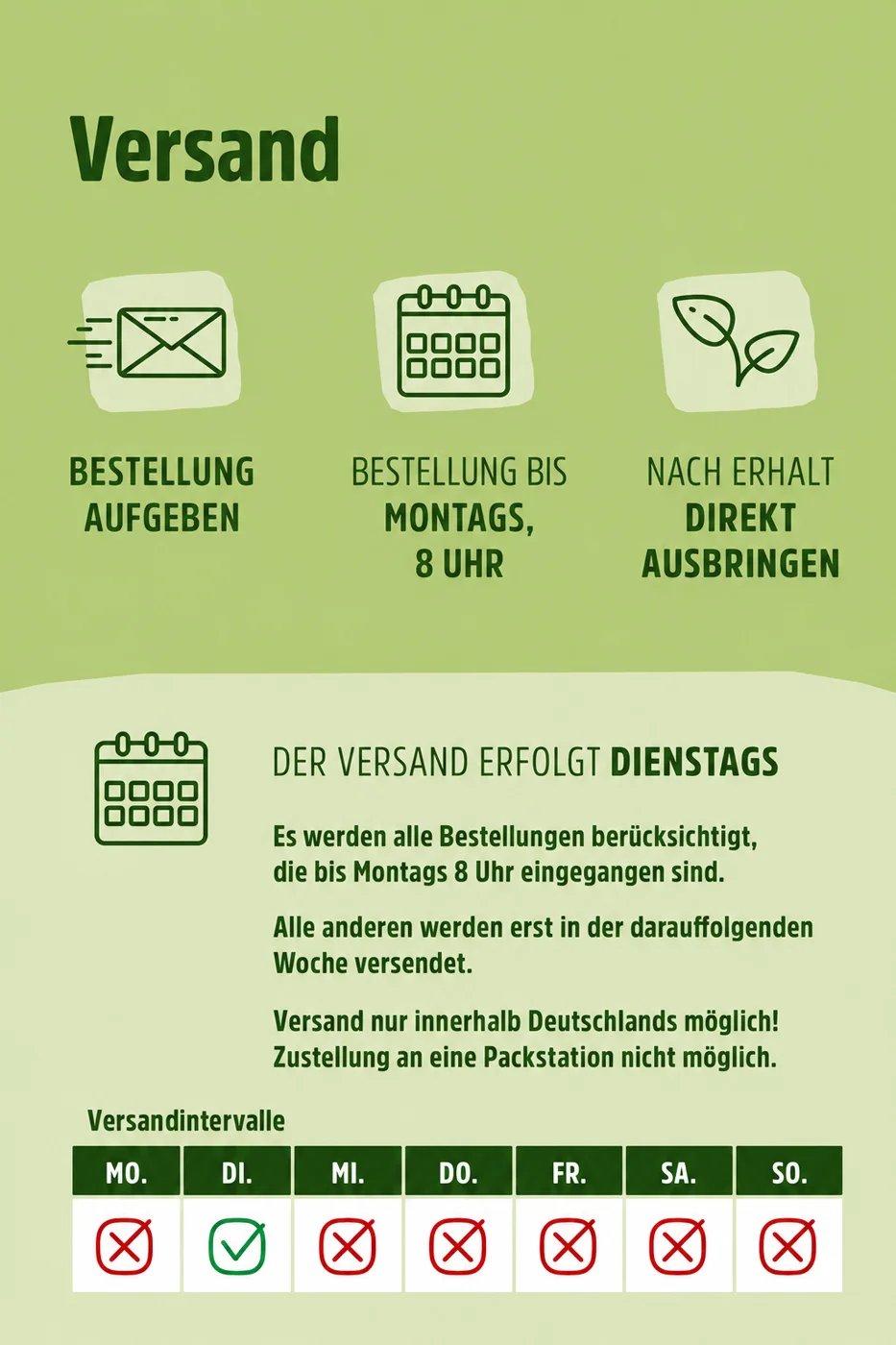
Freshness guarantee: Dispatched every Tuesday directly from our breeding for maximum hatching rate. Order deadline: Monday, 8 a.m. No delivery to parcel lockers.
Important: As all beneficial insects are very sensitive to chemical plant protection products, no such products should have been used for at least 6 weeks before the ladybird eggs or larvae are deployed.
Ladybird larvae – an effective beneficial insect against aphids
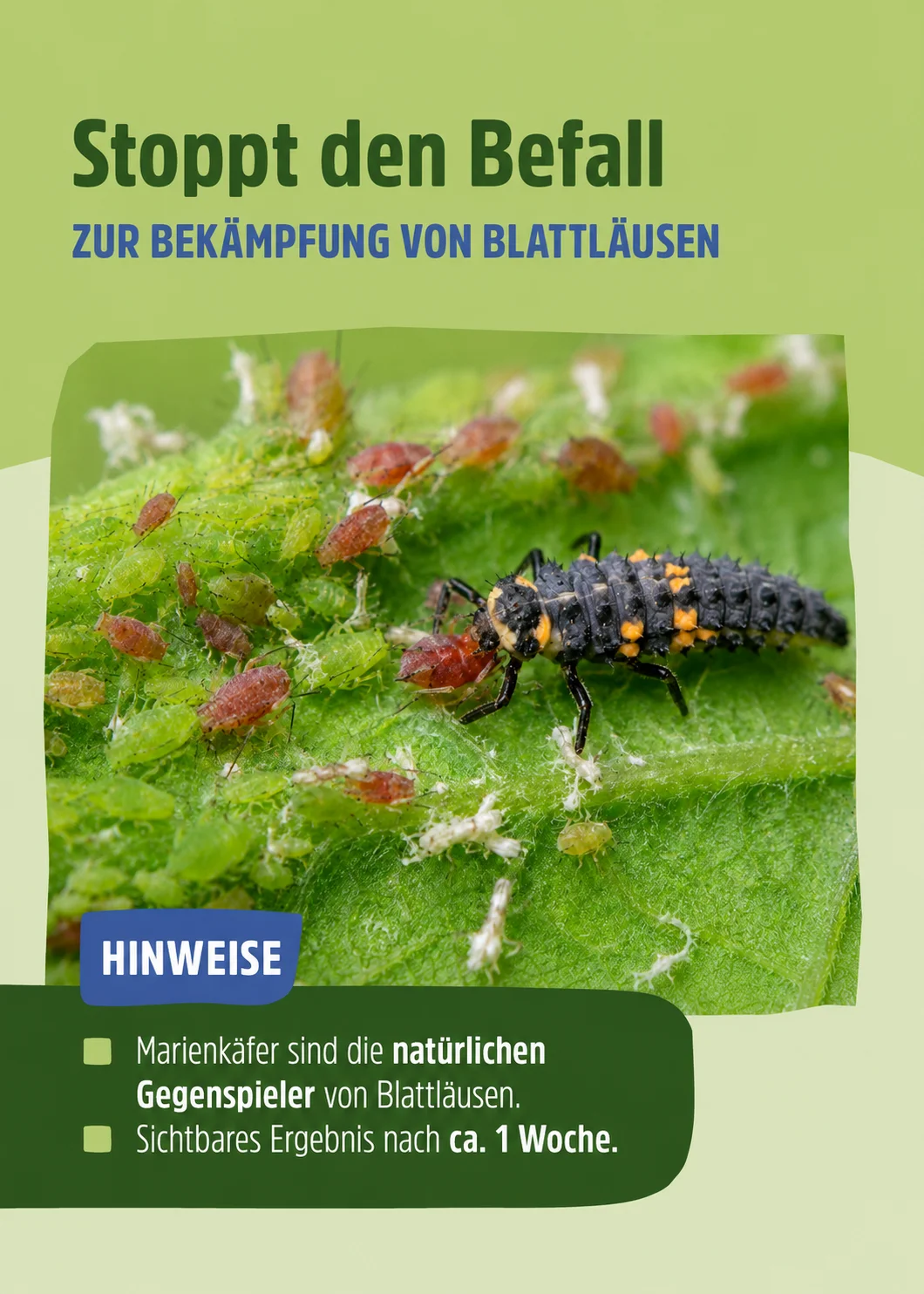
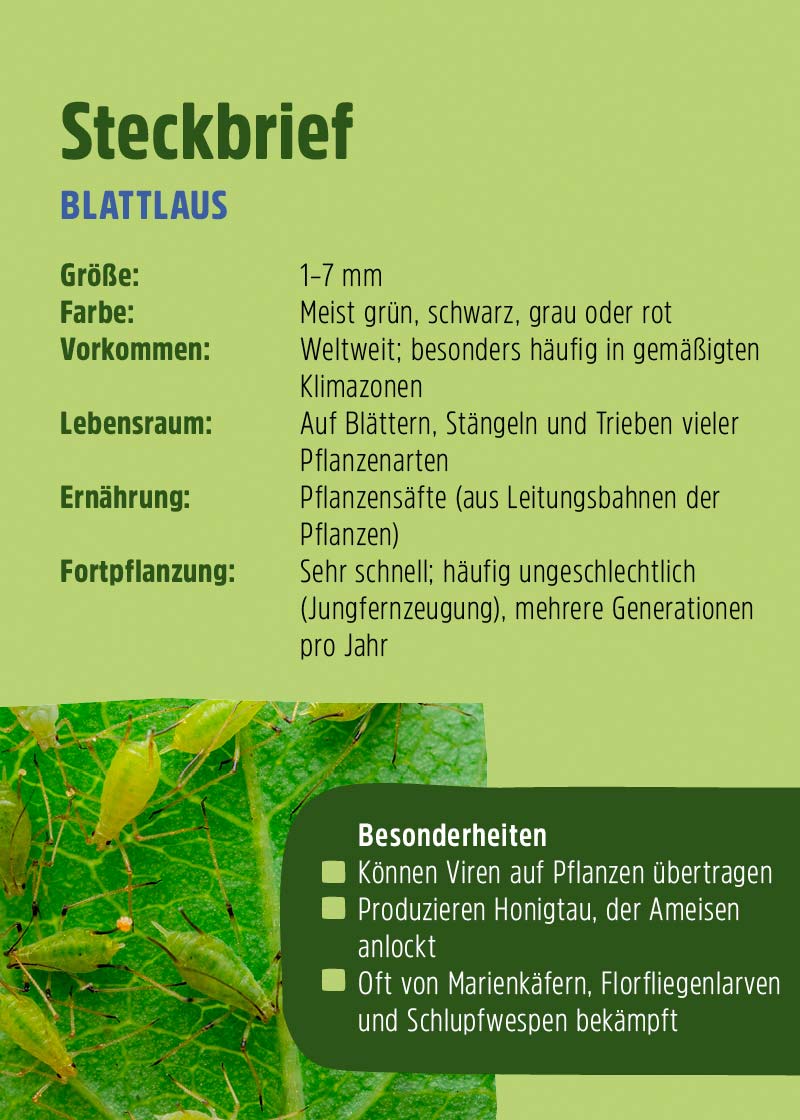
Seven-spot ladybirds (Coccinella septempunctata) are among the natural predators of aphids. But did you know that this applies not only to the adult beetles but also to their larvae? Freshly hatched, they are extremely voracious and feed exclusively on these tiny pests. All kinds of green, black, grey and red aphids are on their menu. During their development from egg to beetle, which takes about 2 weeks, each ladybird larva eats up to 150 aphids a day – adults up to 50 aphids a day. Over its entire lifetime (approx. 25–30 days), each individual ladybird can devour up to 4,000 aphids.
With this healthy appetite, these small insects are ideal for purely biological, effective pest control. On vegetables in particular, the ladybird proves to be a useful aphid hunter because, unlike chemical insecticides, it leaves no harmful residues on the plants or fruit. A true lucky beetle, often used specifically against aphids on indoor plants, in greenhouses and outdoors.
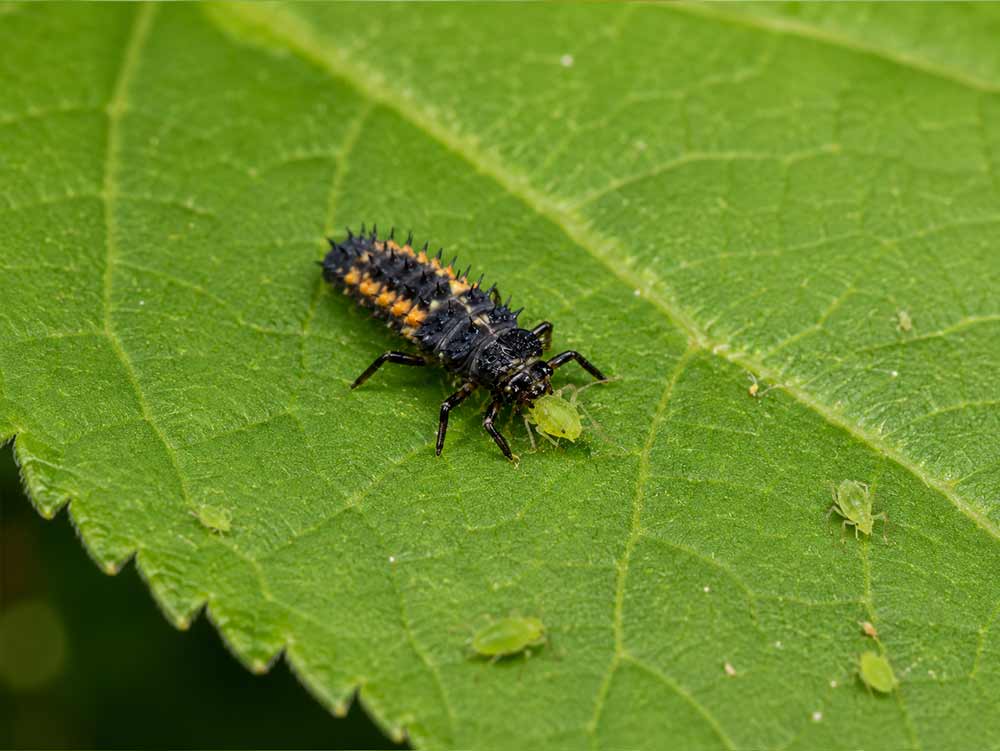

Appearance of ladybird eggs, larvae and adult beetles
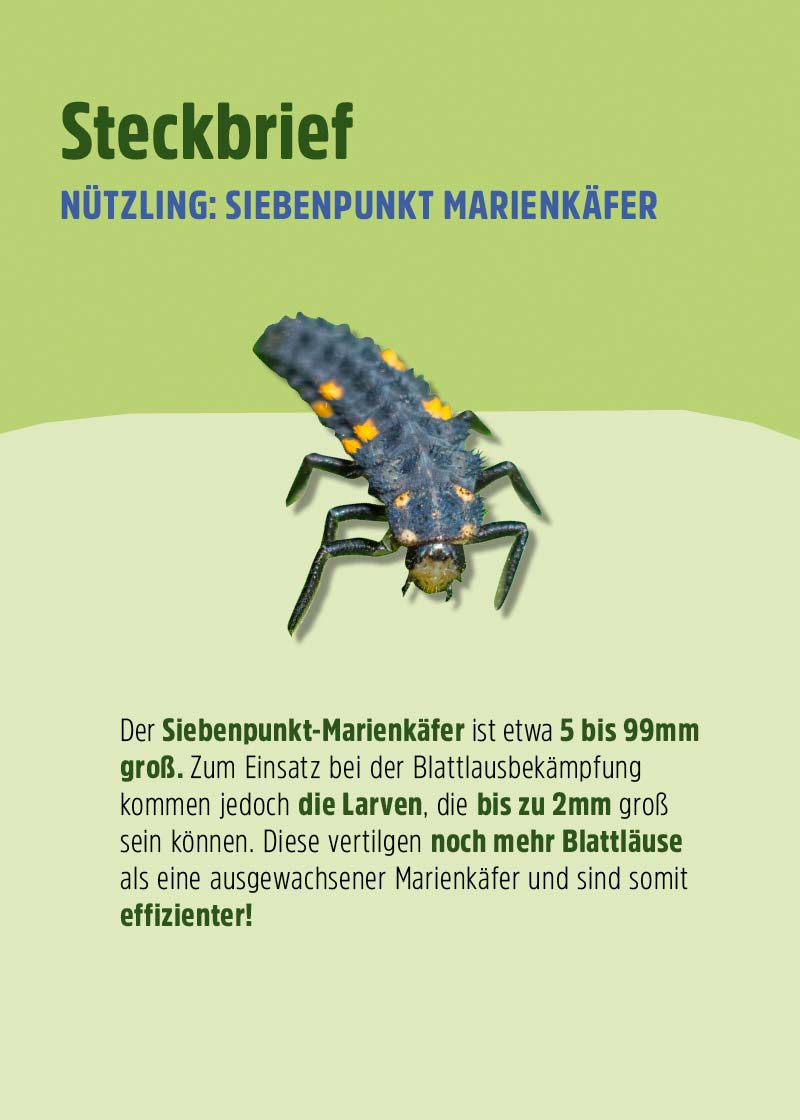
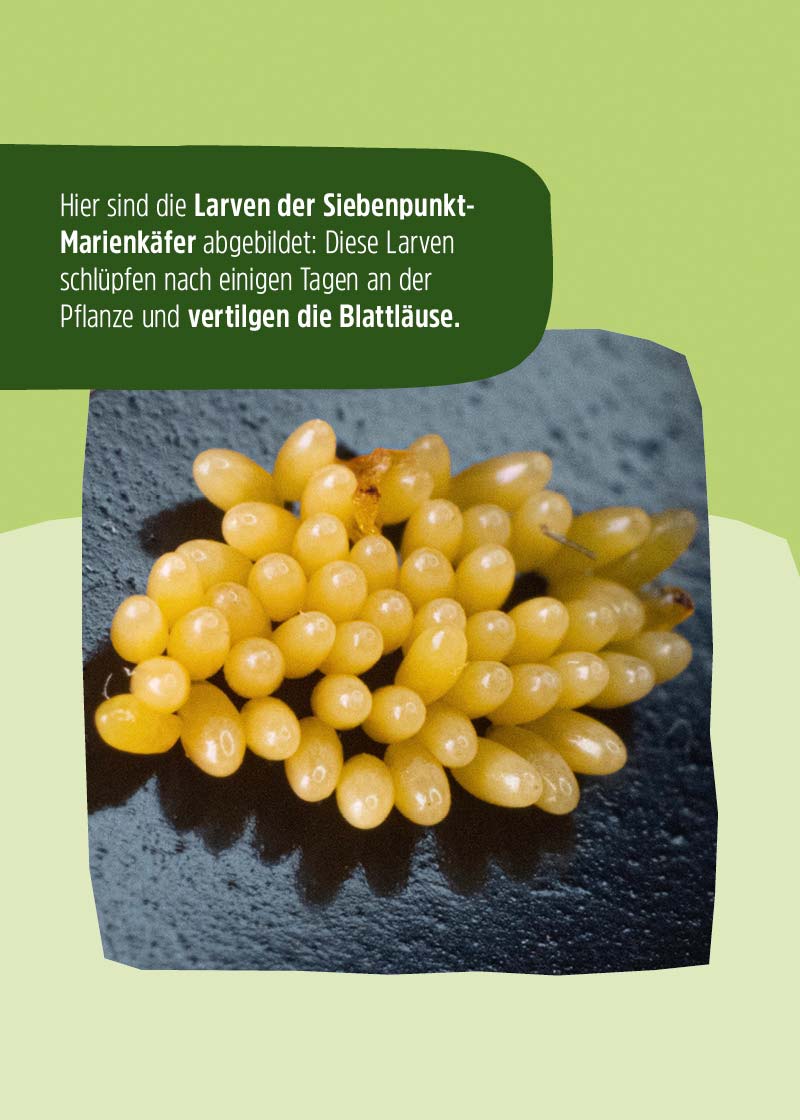
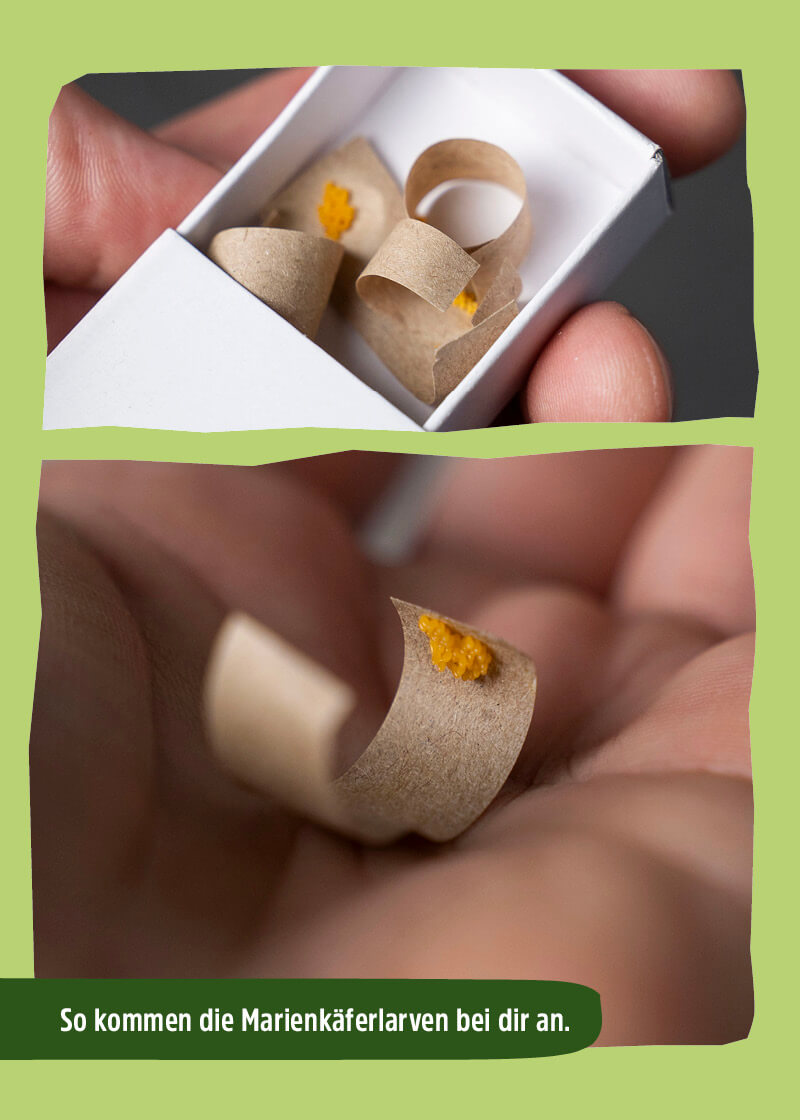
The eggs of the seven-spot ladybird are orange, oval and usually less than 2 mm long. Each female can lay up to 800 eggs at once, placing them close to abundant aphid colonies. The larvae hatch after just a few days. With their elongated body, six legs and black-grey colouring with yellow or orange spots, they initially look rather spider-like and are barely 3 mm long, but over the next two weeks (after several moults) they can grow to up to 9 mm in length.
After hatching, you will find the larvae mainly on the undersides of the leaves, where they crawl around and immediately start hunting aphids. The pupal phase then lasts up to 10 days. Adult beetles are 5–9 mm long and can be recognised by the typical seven black spots on their red wing cases that give them their name. It is often wrongly claimed that each spot stands for one year of the ladybird's life, but in fact it lives for a maximum of one month in total.
Ladybird larvae: benefits at a glance
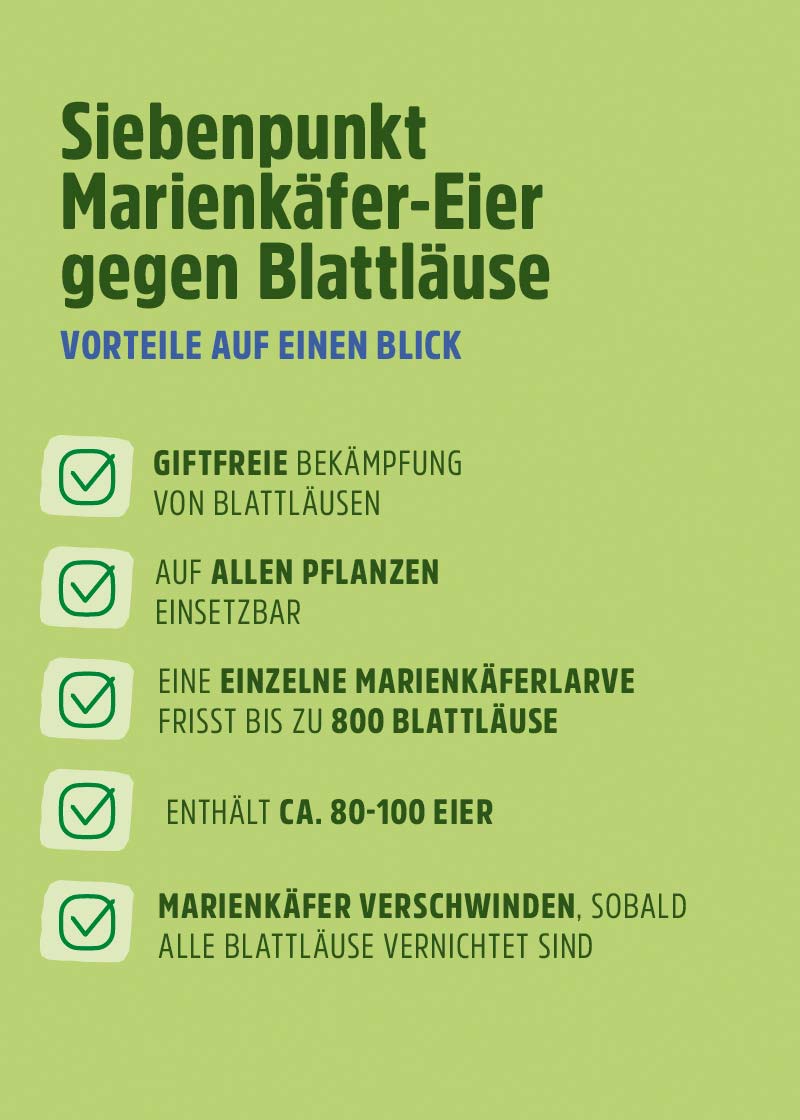
- 🐞 Biological pest control: Ladybirds are beneficial insects and therefore the most natural way to control pests.
- 🐞 Non-toxic: Thanks to natural pest control, no chemical poisons are needed.
- 🐞 Efficient: A single ladybird larva eats up to 800 aphids during its 2-week development.
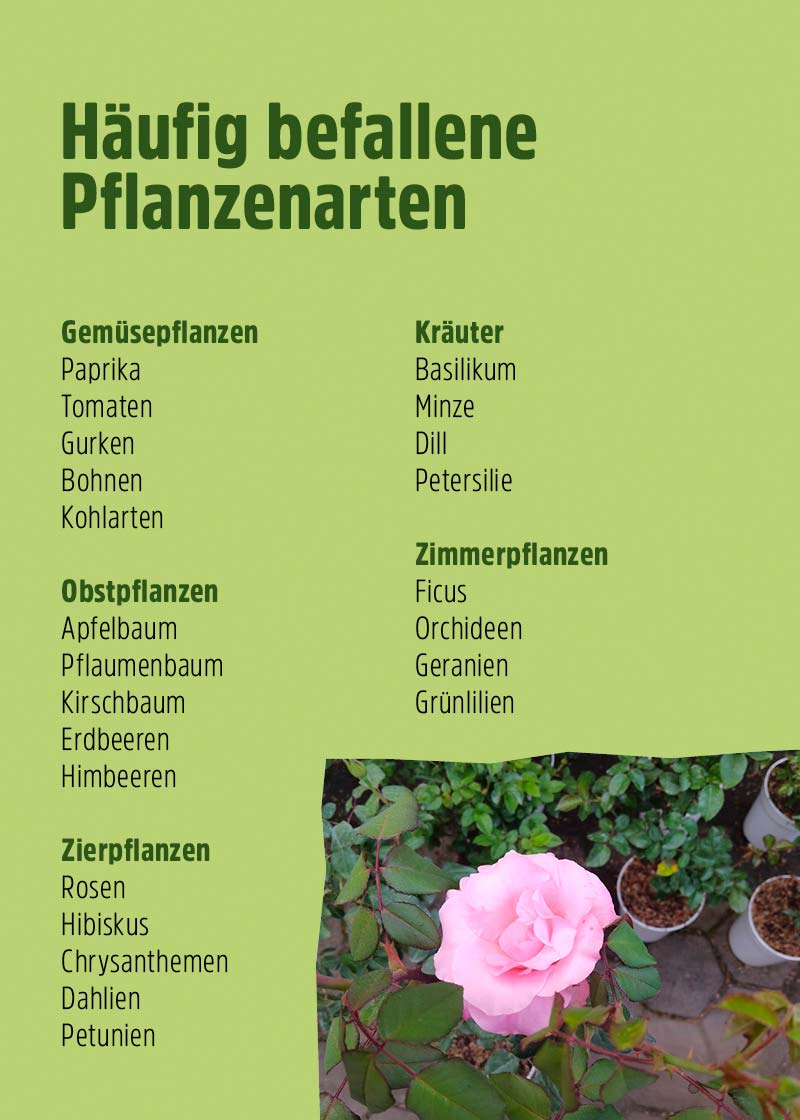
- 🐞 Universal use: From indoor plants to fruit trees, ladybird eggs are suitable for all plants.
- 🐞 Easy to use: Simply place the eggs on the affected plant according to the instructions.
Delivery and application
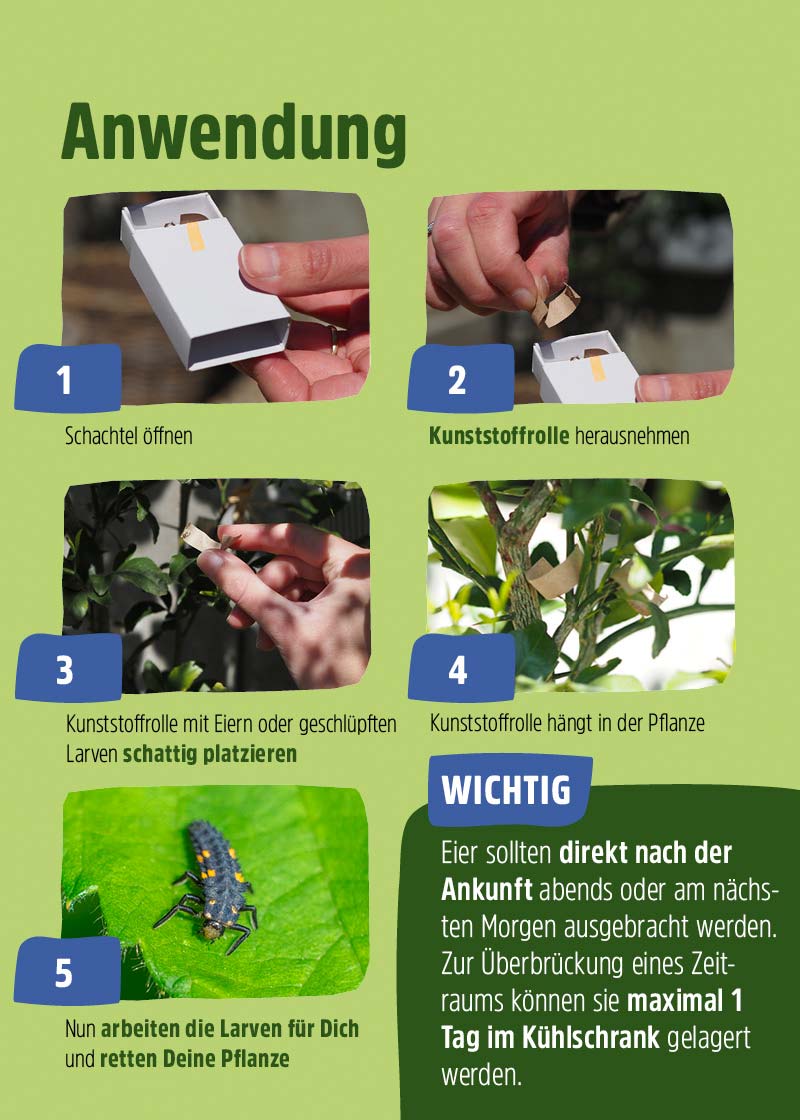
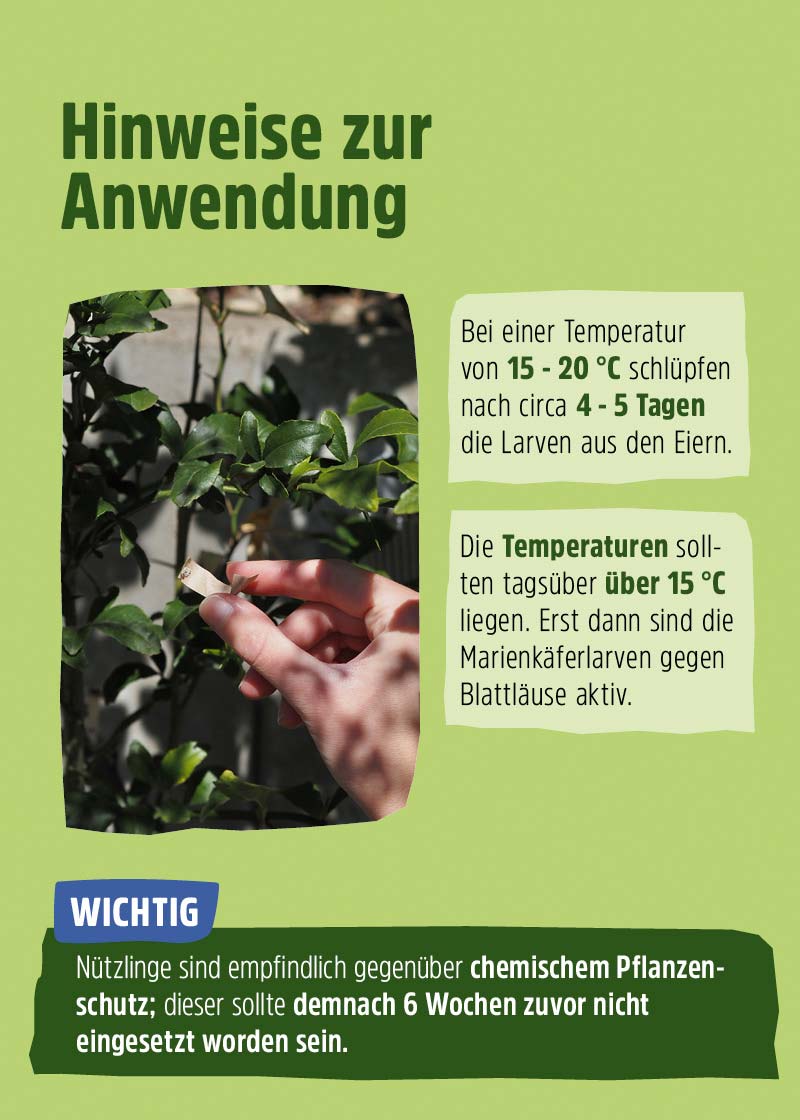
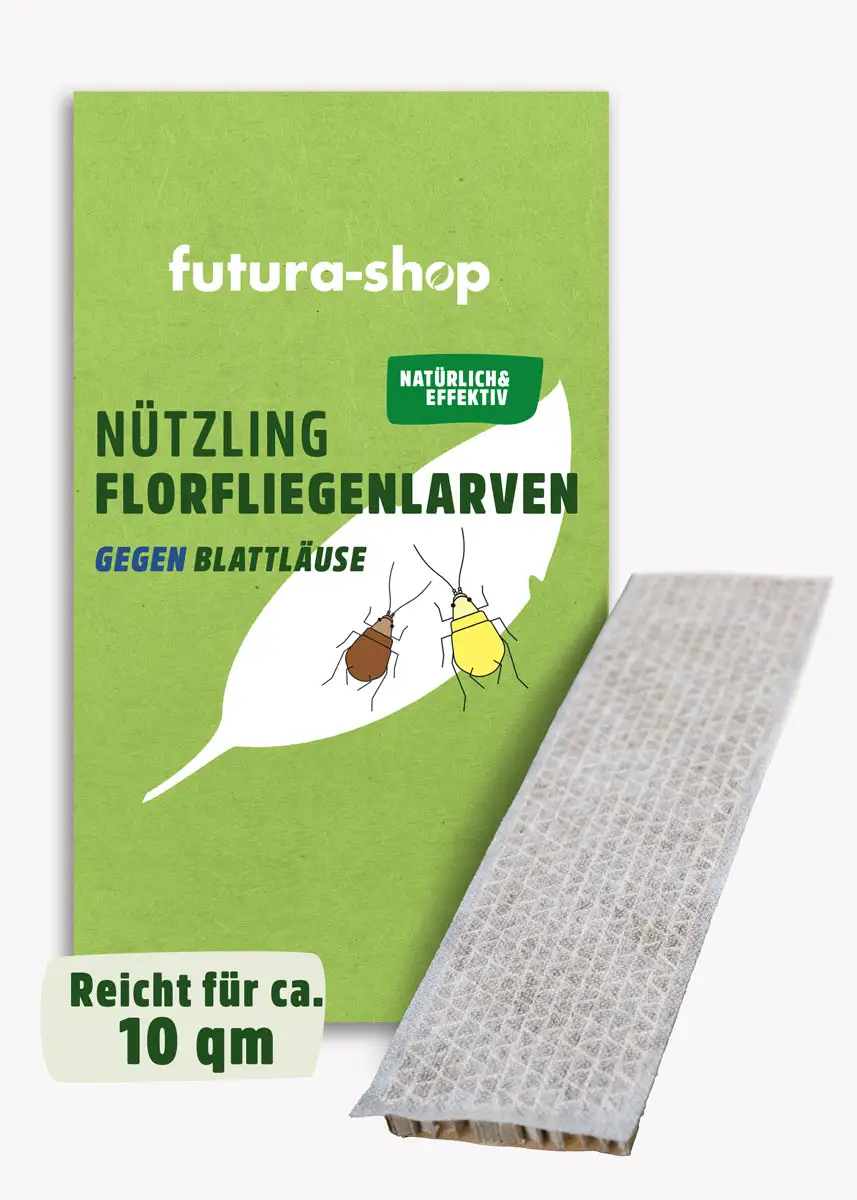
The ladybird eggs are supplied as egg clutches on cardboard. One pack contains approx. 80–100 eggs. They should be put out as soon as possible after arrival, in the evening or the next morning, to protect them from direct sunlight. If there is a short wait before application, you can store the eggs in the refrigerator at 10°C – but for one day at most. To bridge a longer period after hatching, you can also keep the ladybird larvae for a few days in a suitable organic container and supply them with sufficient aphids until you can release them on the infested plants.
Ideal conditions for ladybird larvae
- 🐞 Temperature: The ambient temperature should be above 15°C for several hours a day so that the larvae become active.
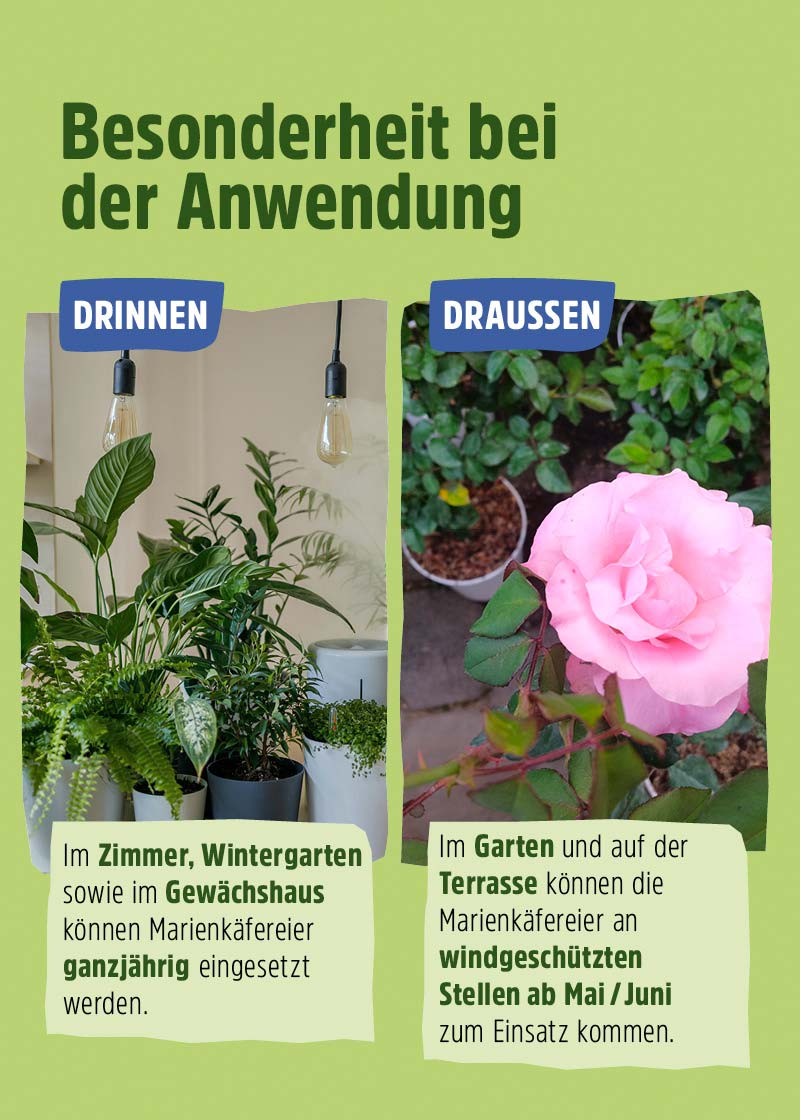
- 🐞 Timing: Outdoors, the ideal time for application is from May/June. Indoors, in conservatories and in greenhouses, ladybird eggs can be used all year round.
- 🐞 Weather: You will achieve the best results on plants that are protected from strong wind or rain.
- 🐞 Enemies: Ants should be removed as far as possible before using ladybird larvae, as they actively protect their aphid colonies from predators. Also note that in open areas the larvae can serve as a food source for birds and other insectivores.
Using ladybird larvae in 3 simple steps:
- 1️⃣ Only open the packaging immediately before you want to put out the ladybird eggs. Carefully remove the cardboard strips from the container.
- 2️⃣ Place the cardboard strips with the eggs in suitable, shady spots in or directly under your infested plants. The larvae hatch after 4–5 days and then climb the plant on their own.
- 3️⃣ You should notice a clear difference after just one week. If aphids can still be found after 2–3 weeks on very heavily infested plants or under unfavourable environmental conditions, you can also put out another batch of ladybird larvae.
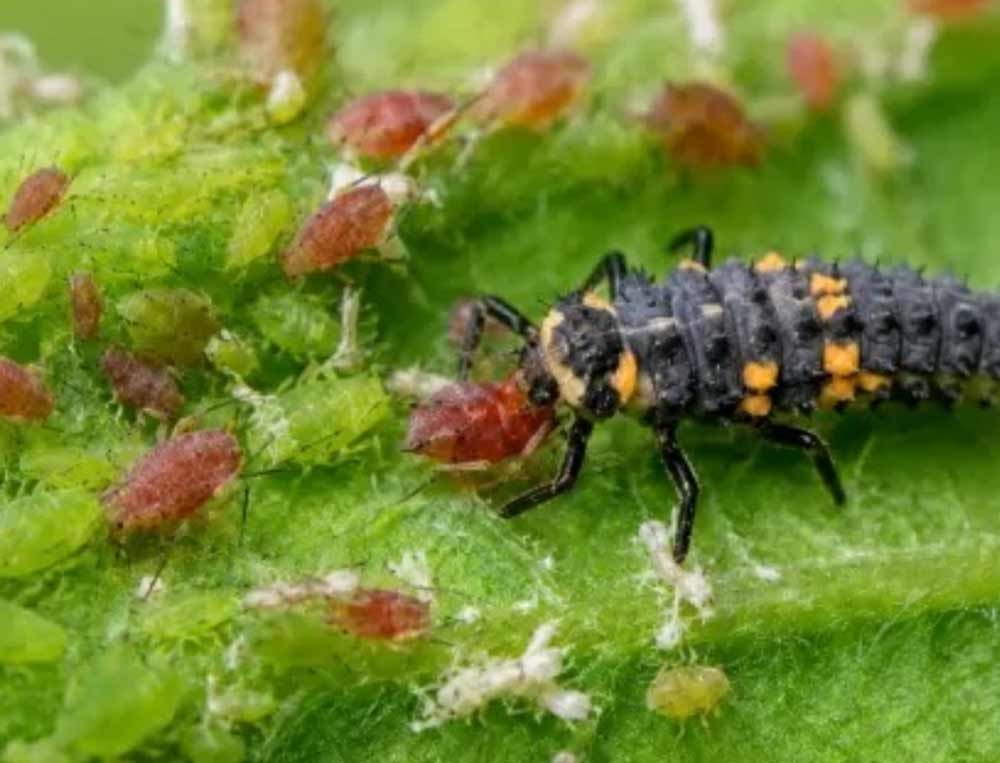
Note: Ladybird larvae usually disappear once they have done their job and the aphids have been successfully controlled. As soon as the pests have been reduced or completely removed, the food for the larvae also decreases. As a result, they move on or look for alternative food sources. However, it is important to note that some ladybird species also prey on other small insects and may stay to feed on further pests on the plants, even after the aphids have gone.
Further information on the use and effect of seven-spot ladybirds can be found in our instructions (German).
| Hersteller | |
|---|---|
| Futura GmbH Nikolaus-Otto-Str. 22 33178 Borchen Deutschland Telefon: +49 5251 69161-79 E-Mail: info@futura-shop.de |
Videos
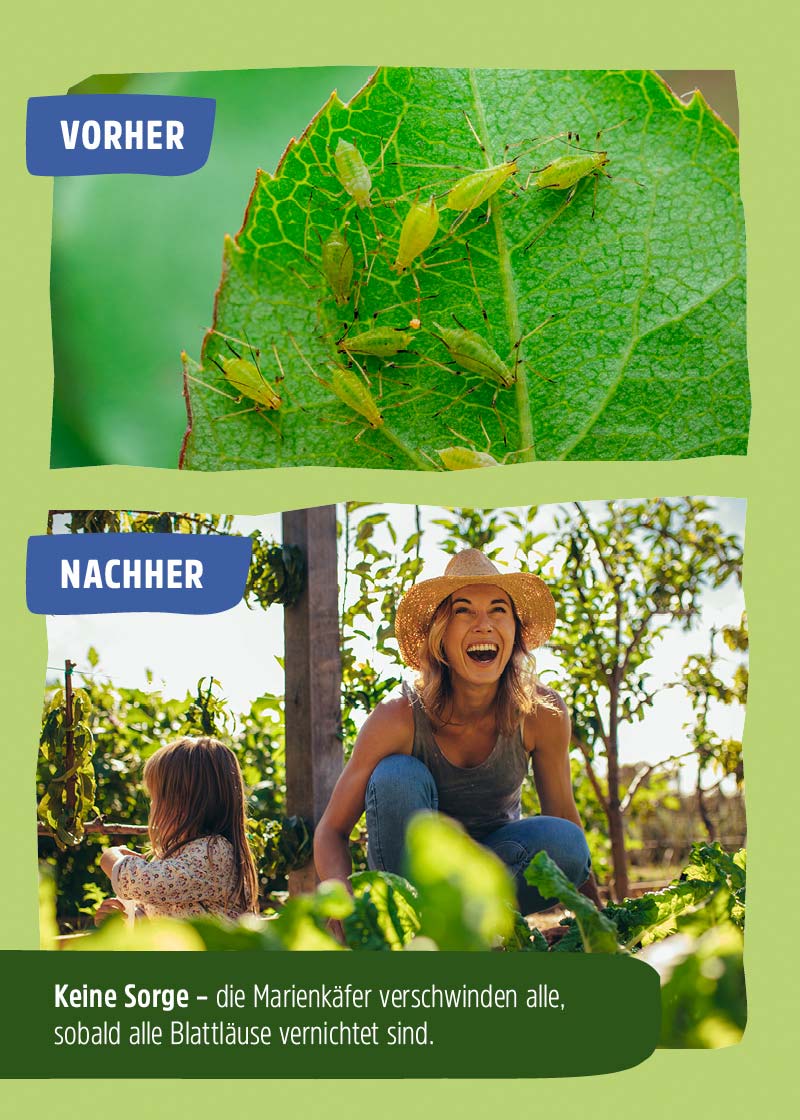
Sobald die Blattläuse beseitigt sind und damit die Nahrungsquelle der Larven erschöpft ist, verschwinden diese meist ganz von selbst. In Einzelfällen können die Marienkäfer auch bleiben, sofern noch andere Schädlinge auf den Pflanzen vorhanden sind, die sich für sie als Nahrung eignen.
Du kannst Marienkäferlarven sowohl drinnen als auch draußen auf sämtlichen Pflanzen aussetzen, die du mindestens 6 Wochen lang nicht mit chemischen Pflanzenschutzmitteln behandelt hast. In Innenräumen oder Gewächshäusern können die Nützlinge meist das ganze Jahr über eingesetzt werden. Draußen solltest du auf geeignete Umweltbedingungen achten, also zum Beispiel ausreichend hohe Temperaturen, windgeschützte Orte und den Schutz vor Fressfeinden berücksichtigen, um das bestmögliche Ergebnis zu erzielen.
Falls es nach dem Kauf der Marienkäfer-Eier unerwartet sehr kalt, windig oder regnerisch wird, kannst du das Ausbringen der geschlüpften Larven auch um einige Tage verzögern. Setze sie dazu in einen geeigneten Bio-Behälter und füttere sie mit ausreichend Blattläusen, bis sich das Wetter gebessert hat. Ältere Larven können schwierigen Umweltbedingungen übrigens besser widerstehen, sodass du sie auch bei anhaltend schlechter Witterung nach einigen Tagen noch vorsichtig aussetzen kannst.
Wenn du Larven des Siebenpunkt-Marienkäfers kaufst, erhältst du quasi die ultimative biologische Schädlingsbekämpfung: Die kleinen Tierchen machen sich nach dem Schlüpfen selbstständig auf die Suche nach Nahrung und sind besonders bei stark befallenen Pflanzen bestens geeignet, denn jede Marienkäferlarve kann in ihrer Entwicklungszeit bis zu 800 Blattläuse verzehren. Beachte jedoch, dass Nützlinge sehr sensibel auf Umwelteinflüsse reagieren. Sind manche Bedingungen – wie zum Beispiel Temperaturen unter 15 °C oder starker Wind – nicht ideal, kann das die Entwicklung der Larven trotz unserer erstklassigen Zuchtqualität beeinträchtigen.
Accessory Items
No prices for your customer group