

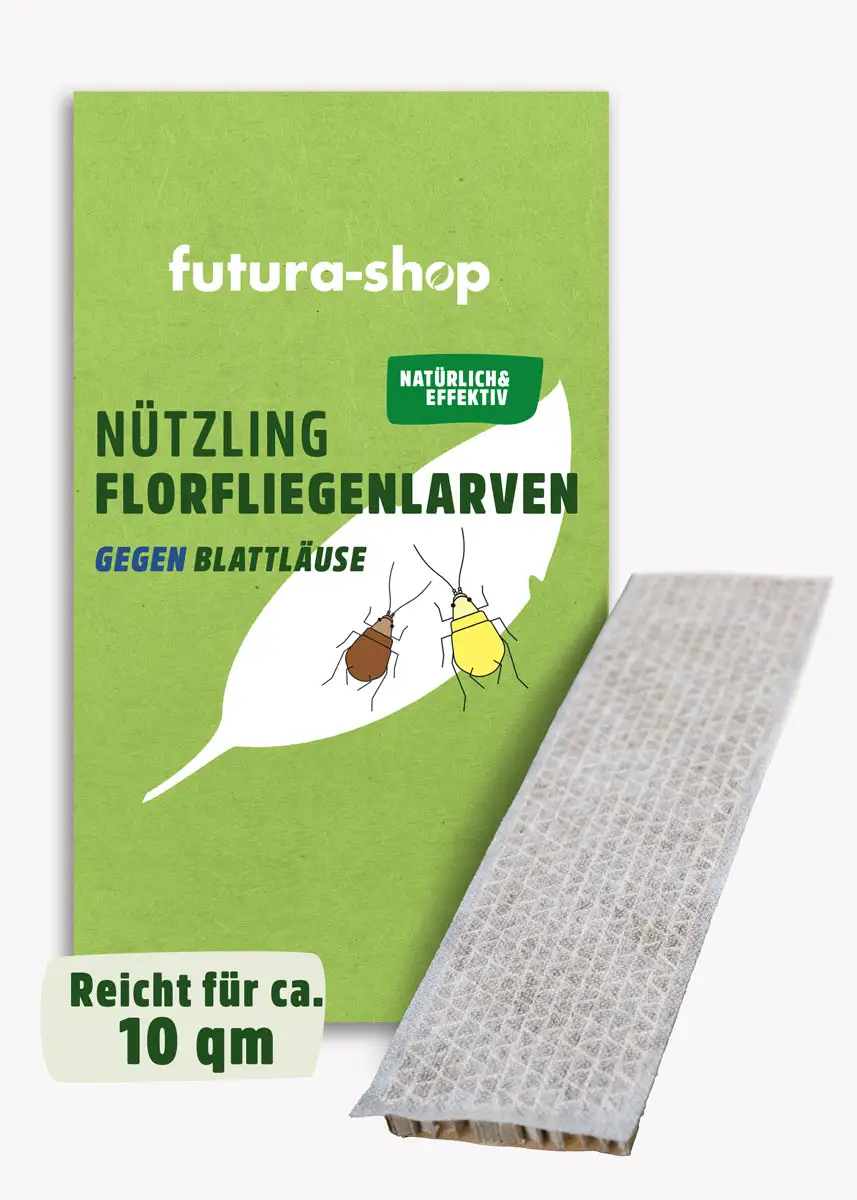



Lacewing Larvae | Beneficial Insects against Aphids & Mealybugs
Available, delivery time: Versand jeden Dienstag

Product information "Lacewing Larvae | Beneficial Insects against Aphids & Mealybugs"
Please note: Shipping is only possible within Germany! No delivery to parcel lockers!
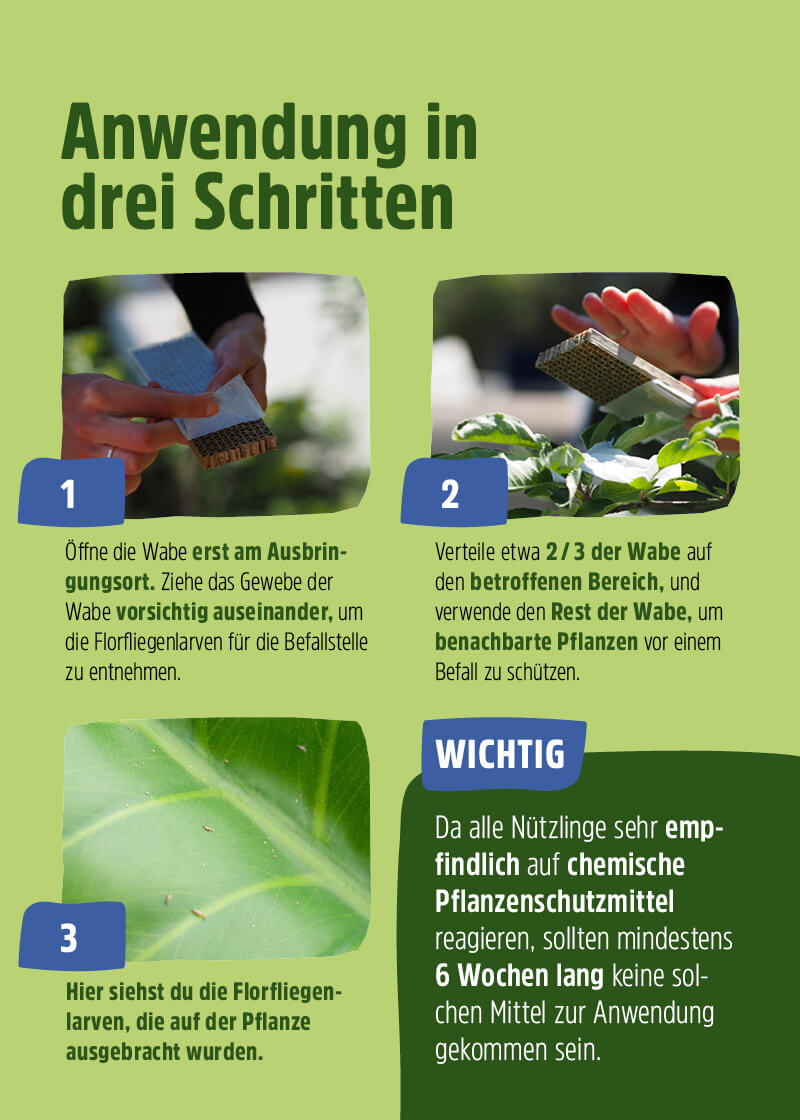
Important: As all beneficial insects are very sensitive to chemical plant protection products, no such products should have been used for at least 6 weeks.
Lacewings against aphids and mealybugs
Using lacewings against aphids and other sap-sucking pests (mealybugs, thrips, spider mites and whiteflies) is a form of biological pest control. The larvae of the green lacewing (Chrysoperla carnea) are among the beneficial insects. Their diet consists mainly of aphids, of which they can eat up to 500 during their larval stage. This not only strengthens them for their metamorphosis into adult insects, but also keeps pests away from the plants – a real win-win situation between plant and insect.
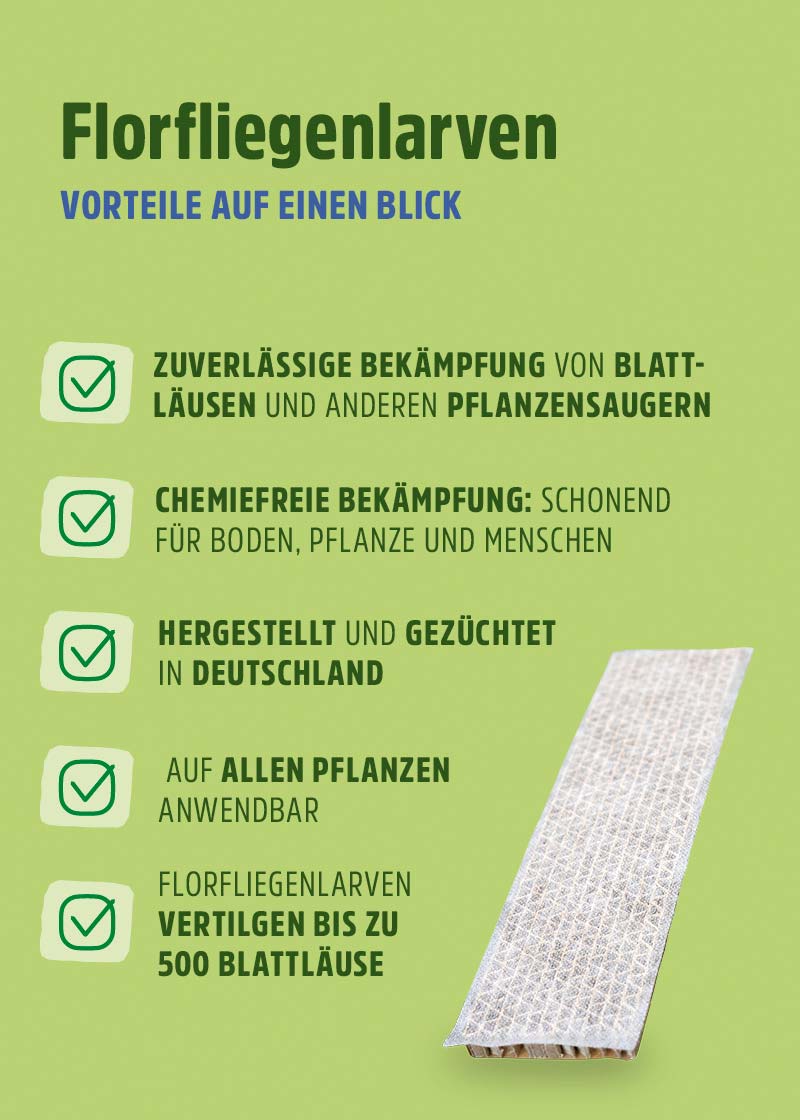
Benefits at a glance
✔ Effective against aphids: The larvae devour up to 500 aphids.
✔ Ecological control: Beneficial insects are a natural remedy against aphids.
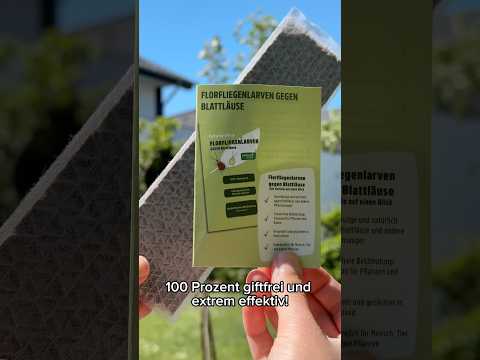
✔ Completely non-toxic: Using lacewings requires no poisons at all.
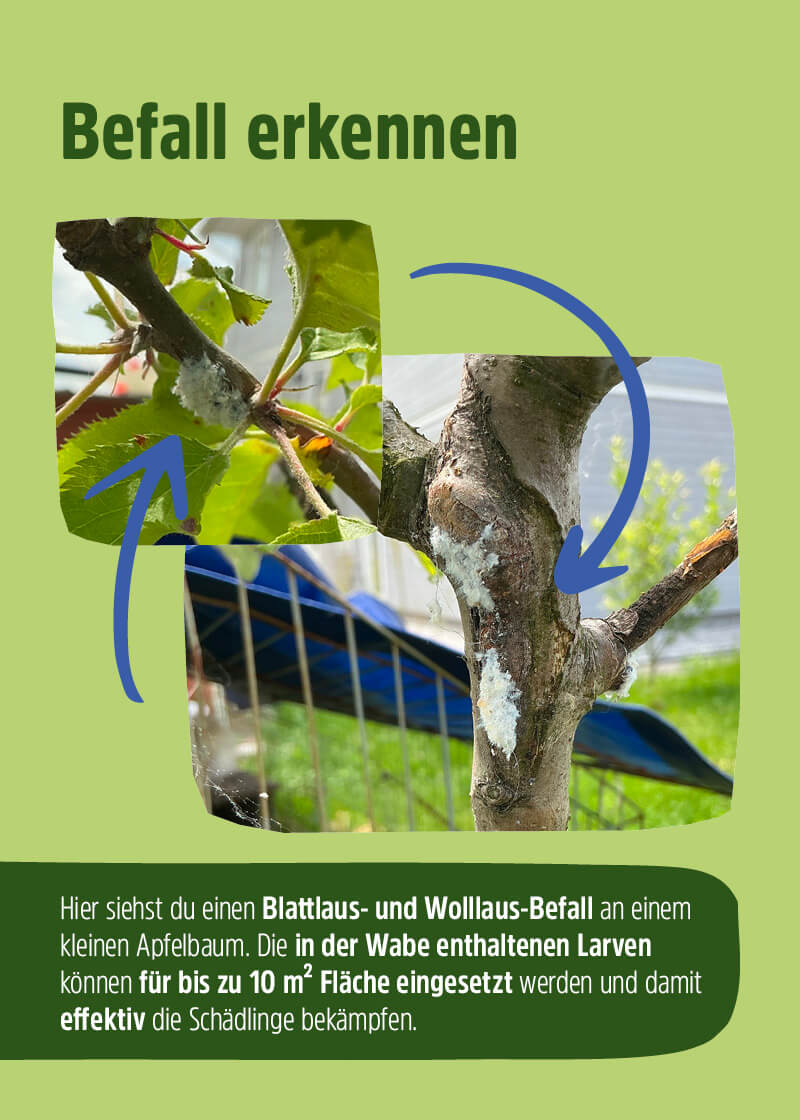
The larvae contained in the honeycomb can be used for an area of up to 10 m².
Application: how do I use lacewings to control aphids?
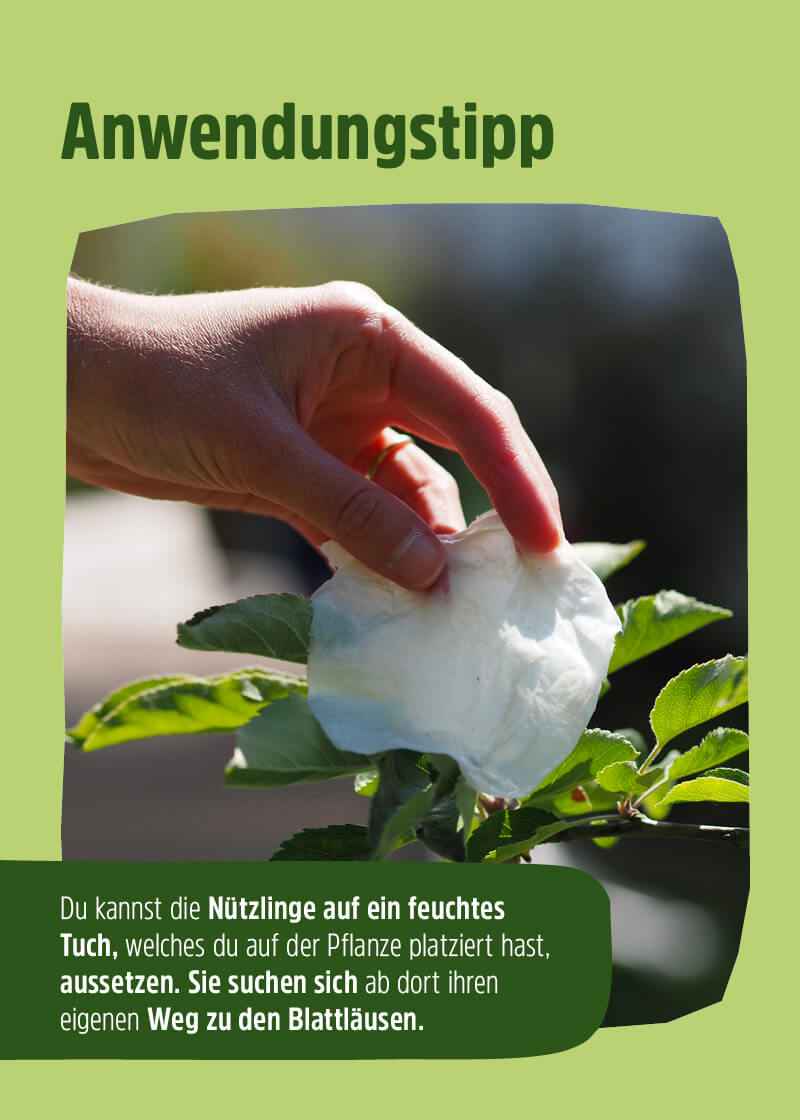
You receive the lacewing larvae from us in a honeycomb containing the larvae, ready to feed. When your delivery arrives, you should put out the honeycomb immediately. It is best to hang it in the plants infested with pests. Leave the honeycomb there for 10 days so that less developed larvae also have enough time to grow and crawl out of the honeycomb. Note that a minimum temperature of 15°C is required so that the larvae do not freeze. However, 20–26°C is ideal. In addition, the plants concerned should not have been treated with plant protection products for at least six weeks before the lacewing larvae are released, as the insects are very sensitive.
Download instructions (German)
Lacewing larvae: what do the insects look like?
Adult lacewings and lacewing larvae differ significantly in appearance. Adult lacewings are 10 to 15 millimetres long and have characteristic transparent, light-green wings with a net-like pattern. In autumn they take on a brownish colour. Lacewing larvae are up to one centimetre long and reddish-brown in colour. To hunt their prey, they have strong mouthparts with which they hold their food.
Using lacewings against aphids: why it is effective
Lacewings are among the beneficial insects. Using lacewing larvae to control aphids falls under biological pest control. Only methods in which humans deliberately use viruses or living organisms to reduce the population of certain animals or plants may be described as biological. As lacewings are natural enemies of aphids, this works very well. In its larval stage, a single lacewing can eat up to 500 aphids. Considering that a female lacewing lays around 20 eggs at a time, this means that a single brood can control 10,000 aphids. Of course, these ideal conditions cannot be expected in the wild, as lacewings also have predators. For this reason, you do not need to fear a lacewing plague either.
If you want to control aphids naturally, lacewings are the right choice. Lacewing larvae are effective pest controllers – and aphids are not the only item on their menu. Plant pests such as mealybugs, thrips, spider mites and whiteflies also end up between the pincers of lacewing larvae. Female lacewings lay around 700 eggs in their lifetime. Depending on the environmental conditions, the larvae hatch after 2 to 20 days. The larvae moult three times. In the larval stage, which lasts around 18 days, they eat as much as they can and build up strength for pupation. This takes around 3 weeks. The adult lacewings then emerge. Lacewings reproduce twice a year, which means there are hungry larvae twice a year, although it is usually mainly the second generation of larvae that eats aphids.
Why a remedy against aphids is important
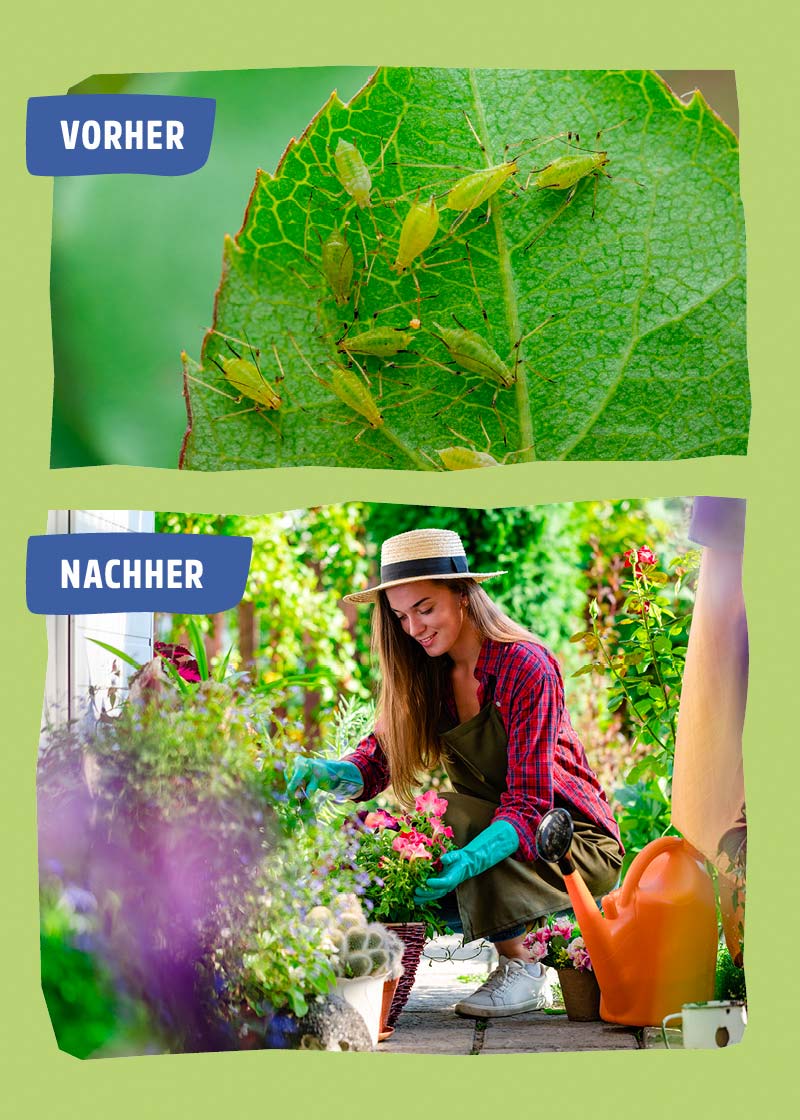
Together with slugs and snails, aphids are among the most common plant pests. They can be green, reddish-brown or blackish-brown in colour. The pests feed mainly on plant sap. With their sucking mouthparts, they pierce the plant cells and ingest the sweet sap. However, aphids feed mainly on the proteins contained in the plant sap and excrete the rest as honeydew. By feeding in this way, they literally suck the life out of the plant. As a result, the plant gradually dies. This is not necessarily due to the lack of plant sap: as the insects often live in aphid colonies on their host, not enough light reaches the plant, which makes photosynthesis more difficult. Incidentally, you should also avoid over-fertilising the plants, as this supplies too much nitrogen, which softens the cell walls and makes it even easier for the aphids to pierce the plant cells.
An additional problem is that the honeydew attracts other unwelcome things. These include ants, which usually do not harm the plant but are still a nuisance. In addition, the aphids coat the entire plant with honeydew, which can promote black sooty mould. Aphids can also spread viral diseases as they spread through the garden. In the worst case, the whole garden becomes diseased – and quite quickly, as aphids multiply incredibly fast in warm, dry summers.
Where can I use lacewings?
Lacewings find their natural habitat in meadows and fields, as adult insects feed mainly on nectar and pollen. However, as the larvae feed exclusively on pests, they are also welcome guests in agriculture and horticulture. Because the insects turn brownish in autumn, they often find shelter in trees, leaf litter and straw heaps. This allows them to remain unnoticed and overwinter in peace. In spring, they change their colour back to green. Their natural habitat is therefore outdoors in the wild. But what can you do if your indoor plant is covered in aphids? You can breathe a sigh of relief, because lacewing larvae need warm temperatures. In the larval stage, temperatures between 20°C and 26°C are ideal. A room temperature of around 21°C naturally falls within this range. If you want to order lacewing larvae, you therefore do not need to worry that they will die indoors.
The situation is different for adult insects, which do not survive in heated rooms. So if you notice that the larvae are pupating in a cocoon, you should take them outside. An unheated loft is also an ideal place to release them. In the garden, you can support the insects as winter approaches by leaving autumn leaves on the ground or providing special lacewing boxes. This way, you can expect the lacewings to be ready for action again next spring and free your plants from aphids. You should also bear in mind that using chemical plant protection products will kill the insects. So if you want to get rid of aphids next year with a healthy population of hungry lacewing larvae, avoid toxic products. This benefits not only the lacewings, but also other beneficial insects such as bees.
| Hersteller | |
|---|---|
| Futura GmbH Nikolaus-Otto-Str. 22 33178 Borchen Deutschland Telefon: +49 5251 69161-79 E-Mail: info@futura-shop.de |